


Photo Credit: BKV Energy
Intro
Amid the many challenges and obstacles the housing market has faced over the last few years, one of its saving graces is the Housing Finance Corporation. Perhaps one of the lesser-known and least visible to the public eye, HFCs have contributed to stimulating the local economy by providing services and programs that deliver safe, decent, and affordable housing in cities across Texas. Many housing developments in cities such as Austin, Houston, and the DFW metroplex have utilized the services and tools that HFCs have provided. The long history of contributions have proven how effective HFCs can be in their respective cities and how states from across the country can use a Texas model to help create and develop new and affordable housing developments in their cities, pushing back against the challenges that make housing so unaffordable in their communities.

Photo Credit: Texas Real Estate Research Center
History
Housing Finance Corporations (HFCs) were created by the Texas legislature through the Texas Corporations Act of 1979. Now codified, the legislature established HFCs as public, nonprofit corporations to help local governments address housing shortages by financing the development and ownership of decent, safe, and affordable housing for low and moderate-income residents. HFCs were authorized to issue bonds and partner with private developers to reduce housing costs and expand access to affordable housing. Today, there are over 20 associations of HFCs across the state, providing services for multiple projects by financing and collaborating with local governments to execute their missions and grow the number of affordable homes in their respective cities.
Function
HFCs, as organizations, have proven to be more effective than originally imagined. They not only provide solutions and services to local governments to help them meet their affordable housing goals but also stimulate local economies, enhance social stability, improve access to education, healthcare, and improve the overall quality of life for residents in their towns. To truly understand the significance and impact of HFCs in the community, you can capture their role through the investments they make. As listed by the Texas Association of Local Housing Finance Agencies, HFCs provide a range of investments, from delivering down payment and closing cost assistance to providing grants to local fire, EMS, and Police Departments. Their financial support services are responsible for providing quality residential rental homes, conducting home rehabilitation programs to prevent vacant property, lots, and homes, and rejuvenating them and returning them to the market. As well as in organizing education, classes, and financial literacy classes for potential future homebuyers. Their commitment to assisting homebuyers is further evident in the planning and execution of homebuyer affairs and other informational forms that go beyond the expected and intended purpose of HFC‘s. HFC assist buyers in accessing affordable home loans through special financing programs and tax credits, which can lower the cost of purchasing a home.
These investments have helped develop many housing projects across Texas, from cities in North Texas to Houston and Austin. There’s no limit to the potential and future assistance that HFCs can provide, as their existence enhances education and financial assistance for future homebuyers across Texas. Many such examples exist detailing their abilities to create positive change, not only for the local government they serve, but also for the residents and homebuyers who look towards a future rooted in affordable housing and for homes and cities in locations that provide safe and decent housing.
DFW
In the DFW Metroplex, multiple HFCs have contributed to the development of their cities through providing financial assistance and services for multiple affordable housing developments. Dallas’ HFC has existed for over three decades and has a variety of responsibilities and duties working with the city and other organizations, including but not limited to:
Provides lower-cost financing to help affordable housing projects get built.
Works with private developers to encourage the construction of affordable apartments and homes.
Helps create and preserve housing by supporting new construction, renovations, and the purchase of existing properties.
Can buy, own, lease, or manage housing properties when approved by the City of Dallas.
Supports mixed-income communities, where people with different income levels can live in the same development.
Currently, the city of Dallas’ HFC consists of 30 projects across the city. Notable projects include their Redbird development. The $60 million project, completed in 2021, built with 300 units, was the beginning of the city’s effort to reimagine the area, break down physical and socioeconomic barriers, and foster a vibrant, inclusive community. For example: Redbird Mall’s surface parking lot. Two-thirds of the property offers housing for families earning no more than 80 percent of the area’s median income, with the remaining units holding no income restrictions.
Neighboring cities like Fort Worth share many of the same responsibilities through their own development projects, promoting mixed-use, mixed-income properties. Fort Worth’s HFC has existed since the passage of the Texas Corporations Act in 1979 and is currently working on multiple projects across the city, including in northwest Fort Worth, and on significant projects such as their Enclave at Westport, offering 339 units. This HFC holds an impressive portfolio of roughly 7,500 units and a total investment of $1.4 Billion to strengthen communities. Its 40-plus years of service have impacted over 60,000 families and partners with the TDHCA Homebuyer Programs, providing mortgage options and down payment assistance to help reduce up-front expenses.

Photo Credit: The Rice
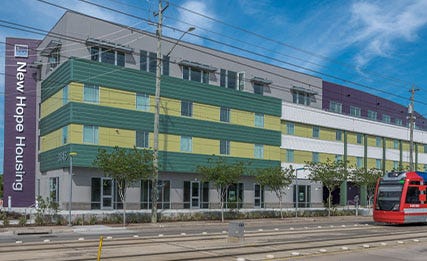
Photo Credit: New Hope Housing
Houston
Some of the most notable HFC projects include Houston’s historic buildings, such as The Rice, and award-winning housing developments, such as the Cornerstone Community, a 47-acre project holding 187 furnished, affordable apartment homes. Projects continue to spur development, such as New Hope Housing Harrisburg in Houston’s East End District, which offers 175 furnished units to assist homeless individuals who have been relocated.
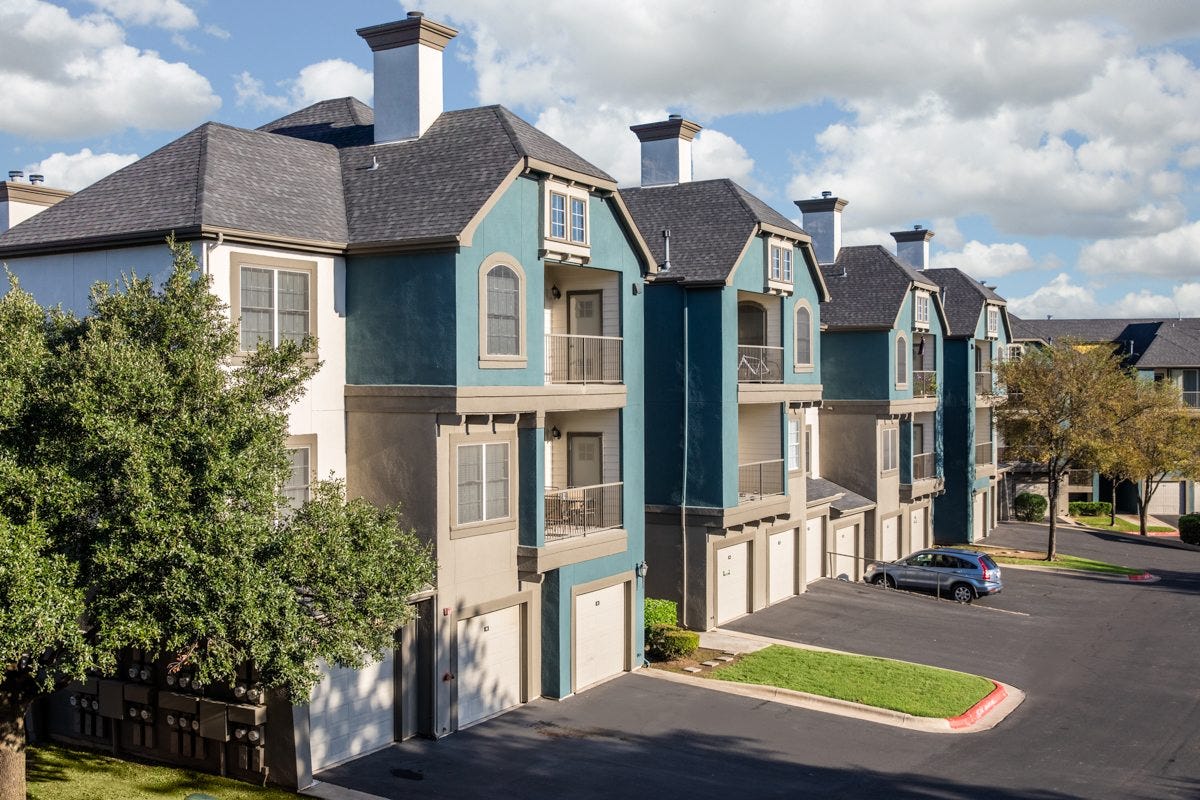
Photo Credit: Stake
Austin
Composed of the city’s sitting council members, Austin’s HFC unites the city’s local governments with this nonprofit authorized by the state government. Near the city, The Domain sits a multifamily property, Twelve100. Acquired with the intent of preserving affordability in the hub of major job and entertainment districts, the property offers 384 housing units, with an application process requiring applicants to meet income requirements based on their household size and the area’s median family income, including verification of income, household size, and unit size.
Conclusion
There can be no denying the issues that plague the Texas housing market. The continued rise in affordability and excess supply of expensive homes has left homebuyers stumped by the unattractive state of the Texas housing market. This is a relief from the stressors that make the market so difficult to navigate. Since their establishment in 1979, HFCs have only created, educated, and organized in their communities to provide homebuyers the assistance needed to call Texas home. With a growing population in cities such as Austin and Dallas, the need for financial support and financial literacy classes will only continue to grow, making it imperative that the continued success of HFCs not only grow in budget but in visibility and resources, which will allow it to fulfill its duties for all future homebuyers and homeowners.
Written by Angel Hernandez
Edited by TFH Team