

THE RAILWAY TIE
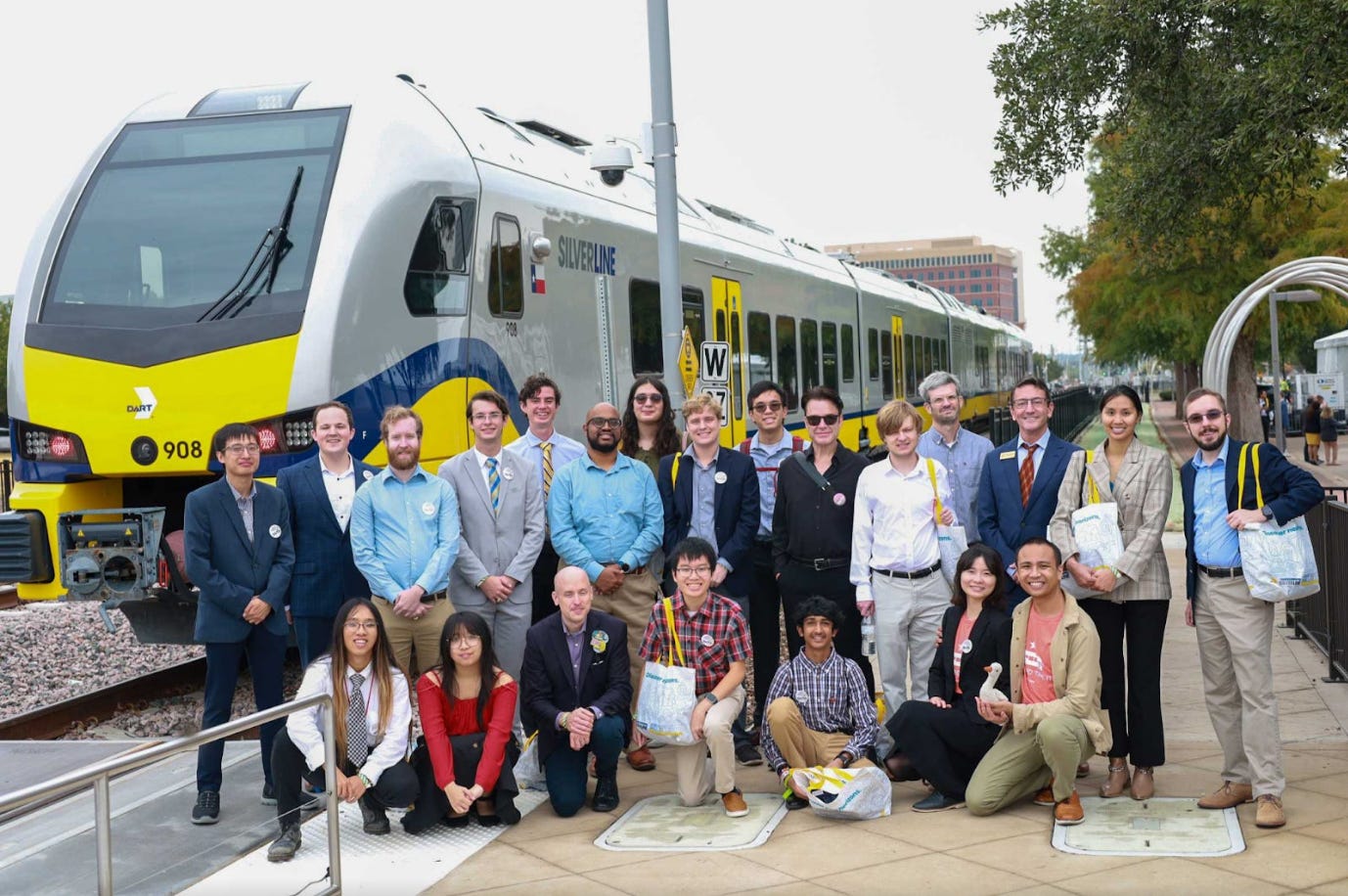
My advocacy story started when I wanted to look more into the upcoming DART Silver Line and the new stations that were going to be built. My early interest in urban planning, my frequent use of the system in Plano to get to work and locations downtown, and an obsession with DART station architecture led me to this perfect storm of stations under construction while their positions and impressions on their respective cities were simultaneously being debated. A foray into the r/dart Reddit revealed a seemingly bottomless well of data - ridership, budget, statistics, financials - and all from the agency itself. I was interested in finding out more - and one direct message later, I was invited to join the online community of DART enthusiasts, Dallas newbies, and OGs alike.
Our little group had our first in-person meetup in June 2024, right around the time that the City of Plano resolved to reduce its sales-tax contribution to the agency. There was an overarching need to find a midpoint to meet for everyone in the metroplex and an online platform for all ages who sought to participate. With a new advocacy organization such as this one, equal challenges stemmed from digital engagement and in-person interaction. With social media, online communication, and all-hands pushes to call representatives and board members, wrangling an online community took lots of hours and many roles. With in-person interaction, going from a singular monthly meeting to draw us out of our homes (armchairs) to active roles block-walking, handing out flyers, organizing community meetings, and even demonstrating outside Plano City Hall took significant planning and coordination.
TO MOBILIZE, WITH DATA
As social media coordinator, I witnessed how online platforms create an illusion that you’re speaking to a whole audience. Yet the person who shows up to a board meeting, or makes a comment over call, are the heavy-hitters that really use the service that just aren’t there on social media. Digital organizing also masks the idea that not all of your audience members can convert into advocates; everyone has different responsibilities and apathies about the way the world (and the government) works. Reaching people is slow and steady, and using existing cache has both benefits and costs.
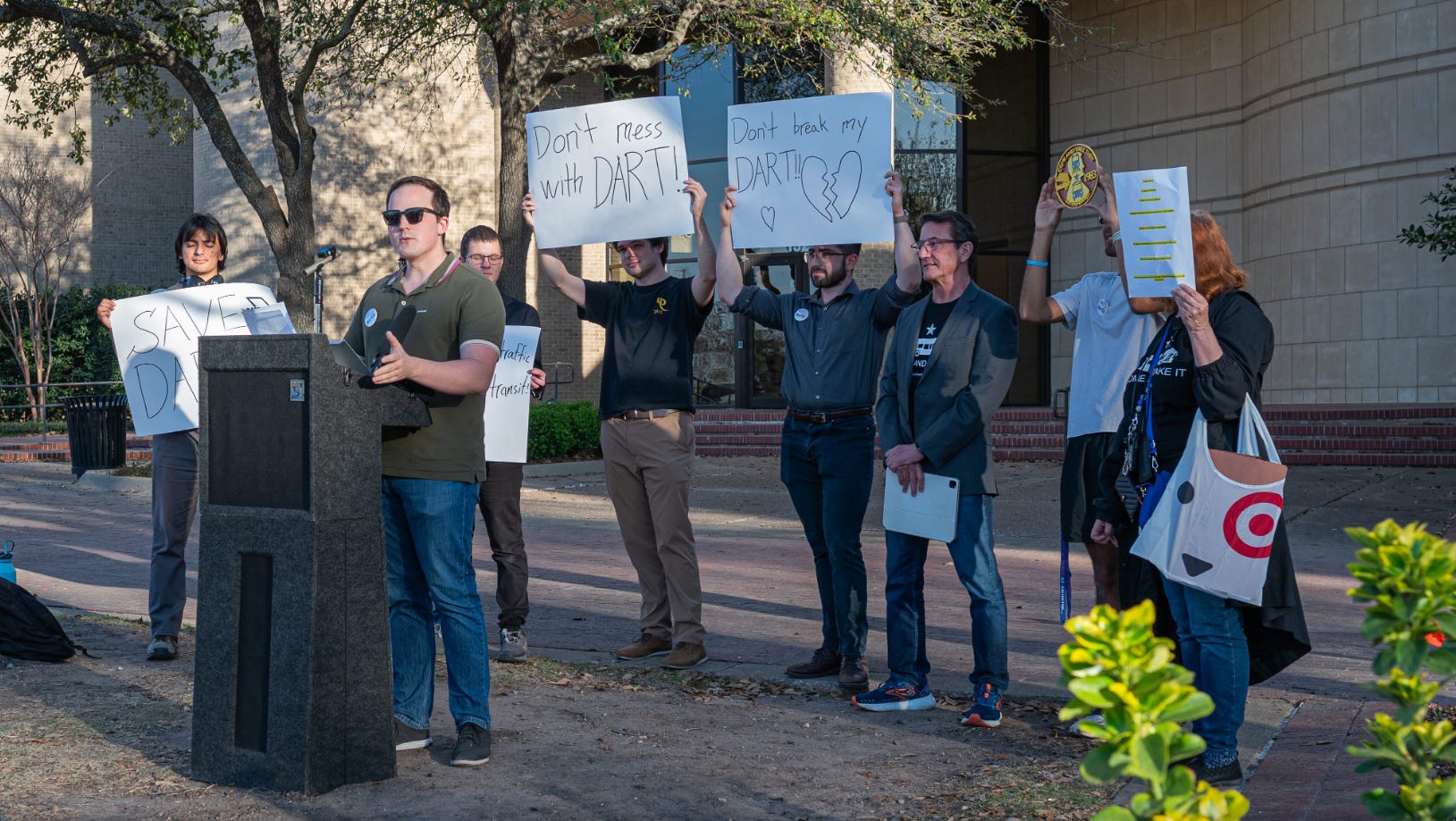
Our organization, the Dallas Area Transit Alliance (DATA), had the paramount goal of representing the riders. Those who used transit as a day-to-day, relied on it for education and employment; interacting with them as a community formed experiences that formed an opinion on how the system works, its successes and its hiccups.
These perspectives are valuable when addressing the city council or DART board, posing arguments from both a policy and an anecdotal side. It is valuable to keep the city council and DART informed and accountable to the users - and this connects strongly to housing, as a lot of the decision-makers don’t live the way that the average person does. Representation at the municipal level is often out of touch with local population and housing trends, where short- and long-term intervention is often misplaced - this feels very similar to where adjustments to outdated zoning or repayments for decades of urban discrimination stall.
A more deliberate connection is the way transit intersects with housing and commercial communities, like in TODs. Especially in Dallas, ongoing projects like the TOD near Buckner, SMU/Mockingbird, and the untapped potential around Silver Line stations address both station planning, indirect value generated (which was a pain point for the line throughout its construction), and frequency for trains and buses. There is a fine balancing act between what the city chooses to subsidize and how it lets market forces run their course - yet in both cases, I believe a lot of people fail to realize how innately controlled the market for funds is, and how urban and suburban planning creates the knock-on effects that we try to incrementally alter.
DALLAS MOVING FORWARD
I wholeheartedly believe in a better DFW, where traffic isn’t mind-numbingly slow, housing is available and with a good variety of affordable options, and transit is fast, clean, and on-time. Advocacy has taught me the importance of institutional redundancy. Too often, costs, initiatives, and budgets have no back-up, limited accountability, and are at the whim of mid-year political chaos. And this extends to the real, infrastructural chaos of a track fault on the Red Line, no TRE Sunday service, or Silver Line trains every hour. But great groups like DATA, Dallas Urbanists, and more are working hard to offer some measures of accountability back to the people that speak for us, by mobilizing a growing online following and serving as the crucial intermediary that informs people about community change and potential opportunities. These efforts can finally help align the people and city with their common goals - for affordable housing, reliable transit, and a more accessible Dallas for all its citizens.
Written by Rohan Kodibagkar
Edited by TFH Team
Unfortunately areas like Dallas District 8 in Kleberg Rylie have neither transit nor bus because DART Rail ends at Buckner Station and area roads are so poor they don't support buses. This leaves the residents, many in mobile home park with no services nor access.